Articel Details
High-Viscosity Two-Component Adhesive Filling Keeps Going Wrong? One Press-plate Filling Solution for Both 50 ml and 400 ml Cartridges
WEFILL-CAR-AB-F005-400-50 follower-plate filling machine handles high-viscosity two-component adhesives and both 50 ml and 400 ml cartridges, with ±1% capacity accuracy and 1:1 to 10:1 ratios.
11-11-26
High-Viscosity Two-Component Adhesive Filling Keeps Going Wrong? One Press-Plate Filling Solution for Both 50 ml and 400 ml Cartridges
In processes such as electronic potting, structural bonding, and thermal interface materials, two-component adhesive filling often goes unnoticed—but it is easy for problems to arise. High adhesive viscosity, poor flowability, or wall clinging and separation after standing can all cause ratio drift and air entrapment in filled cartridges, affecting the consistency of subsequent dispensing. The key to choosing equipment actually lies in whether the feeding method matches the material condition.
I. Feeding Method Determines Filling Stability: Why Use a Follower Plate
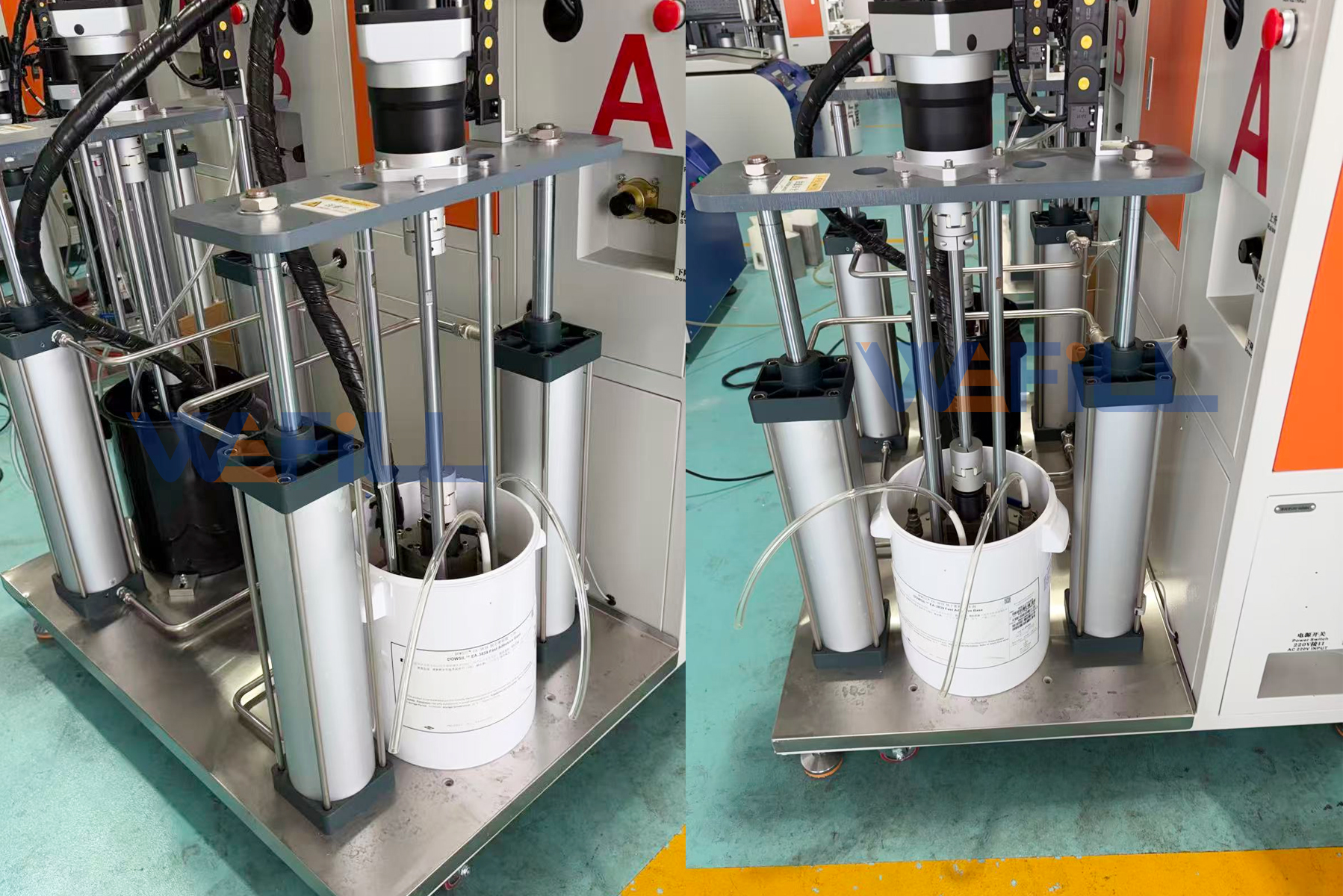
The WEFILL-CAR-AB-F005-400-50 uses a follower-plate feeding structure. The follower plate is sized for 20 L (5-gallon) containers, matching common raw material packaging specifications. The feeding path is short and well sealed, so the adhesive is subjected to less disturbance while being transferred from the pail to the cartridge.
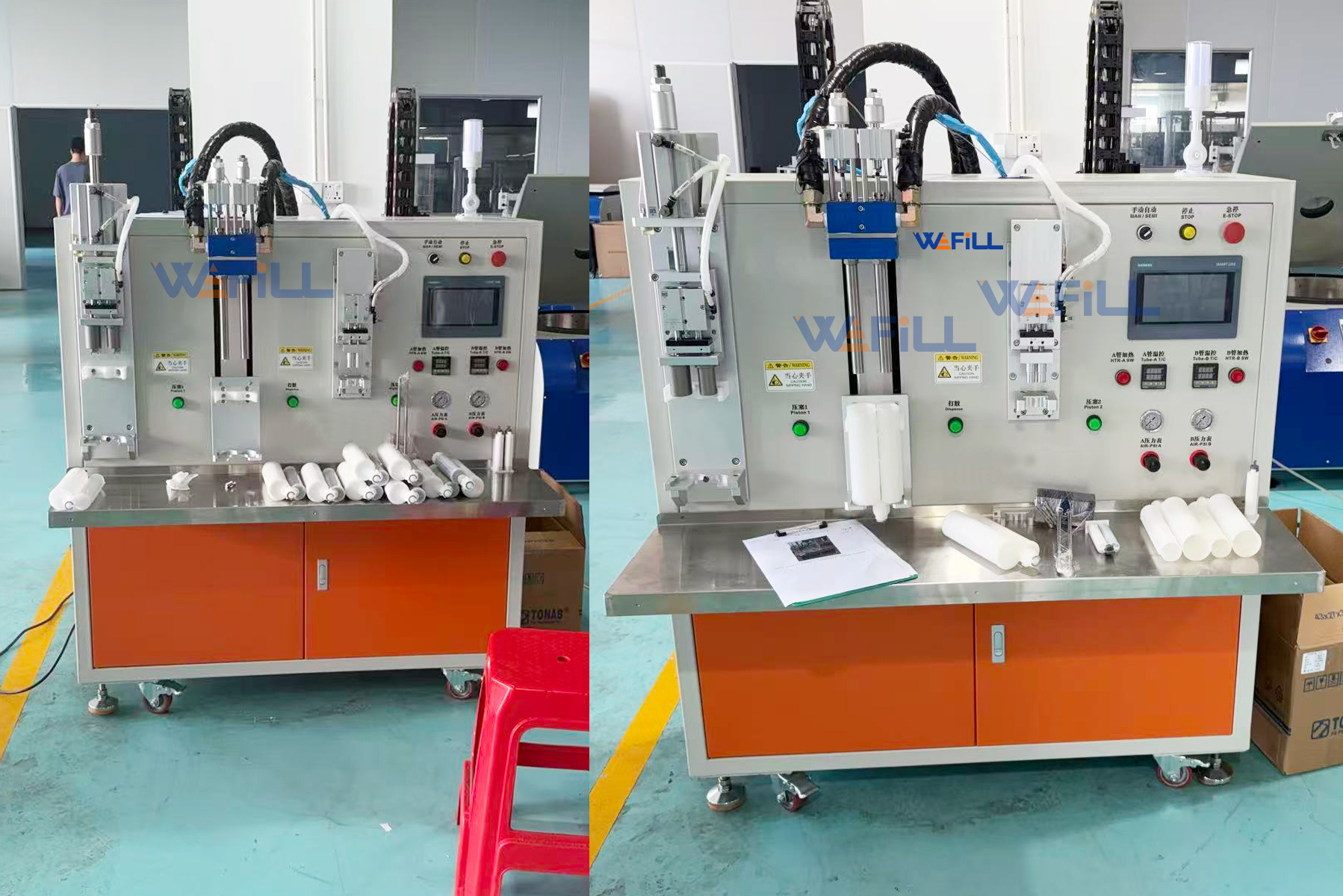
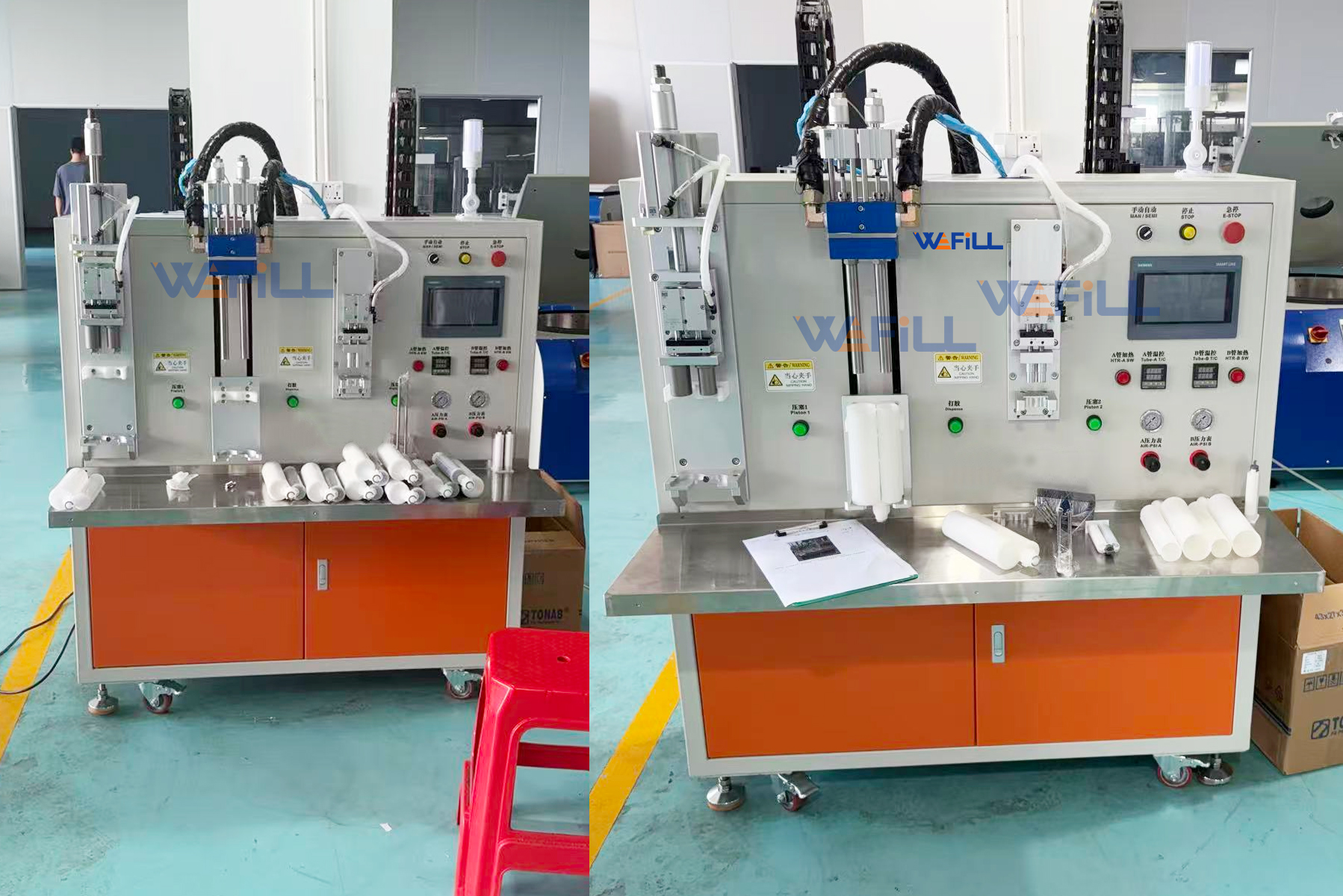
As shown in the product image, the machine is a floor-standing unit in white and orange. Above the body is a cantilevered operation panel with a touchscreen and buttons, and casters are installed at the bottom for easy movement and positioning within the production line. Inside the machine, A and B adhesives are fed through two independent paths, each passing through a filter and hose to the two-component dispensing valve, and then metered by piston pumps into the cartridges held in the fixture. The sequence of large-port feeding, filling first, and capping afterward reduces agitation and air entrainment during filling.
II. Stable Filling Even for Wall-Clinging Adhesives: One Machine for Both 50 ml and 400 ml
For adhesives with wall-clinging behavior, the equipment has been specifically designed for filling accuracy and bubble control. Wall-clinging materials are characterized by discontinuous flow and easy residue on container and pipe walls; ordinary filling tends to produce more in the early stage and less in the later stage. The WEFILL-CAR-AB-F005-400-50 supports four common mixing ratios: 1:1, 2:1, 4:1, and 10:1. The capacity error is controlled within ±1%, and the viscosity range is 10,000–1,000,000 mPa·s, covering common high-viscosity requirements.
In terms of consumable compatibility, both 50 ml and 400 ml A/B cartridges can be filled, and 75 ml, 200 ml, and 600 ml specifications are also compatible. Customers who need both small sample packages and large-volume production do not need to add another machine for different specifications.
III. Parameters and Application Scenarios
The machine has a rated power of 2–3 kW (220 V 50 Hz), working air pressure of 0.4–0.7 MPa, and filling speed of 5–10 cartridges/min. The control system is Siemens PLC + HMI. Capacity and speed can be entered and adjusted automatically via the touchscreen, and specification changes are mainly parameter settings rather than frequent mechanical modifications.
Applicable materials include AB adhesives, epoxy resin, polyurethane adhesive, acrylic, thermal silicone grease, PU potting compound, structural adhesive, casting adhesive, and more. It is well suited to scenarios dominated by high-viscosity two-component adhesives, such as electronic packaging, thermal materials, and building material composites. For specific selection, it is recommended to confirm further based on actual adhesive characteristics and production capacity requirements.
IV. Frequently Asked Questions
Q1: Is it necessary to replace parts when switching between 50 ml and 400 ml cartridges?
The equipment is compatible with multiple specifications from 50 ml to 600 ml. Capacity and speed are set via the HMI, so switching is mainly based on parameter adjustment. Whether supporting fixtures need to be replaced should be confirmed according to the actual cartridge model.
Q2: Why is “wall clinging” specifically emphasized?
Wall clinging can cause inconsistent filling amounts. The equipment has been optimized for the filling process of adhesives with wall-clinging behavior, enabling stable output during continuous filling. Actual performance depends on adhesive characteristics, ambient temperature, and other factors; please refer to actual product performance.
Q3: Does the equipment have viscosity requirements for the adhesive?
The applicable viscosity range is 10,000–1,000,000 mPa·s. If your material falls outside this range, we recommend communicating with a WEFILL specialist for confirmation first.
If you are looking for a solution for filling high-viscosity two-component adhesives into cartridges, you are welcome to contact WEFILL and provide the adhesive model, target cartridge specifications, and production capacity requirements. We will help determine whether the WEFILL-CAR-AB-F005-400-50 is suitable, or provide targeted filling recommendations.
Recent Blog Here
Related Articles
Articel
What Does the Pressure Tank Do in an AB Adhesive Dispensing Filling Machine?
Learn how pressure tanks in AB adhesive dispensing machines isolate A/B componen...
Articel
Adhesive Bonding Methods: A Practical Guide to the 10 Dominant Techniques (2026)
Compare 10 adhesive bonding methods—instant, structural, hot melt, pressure-sens...
Articel
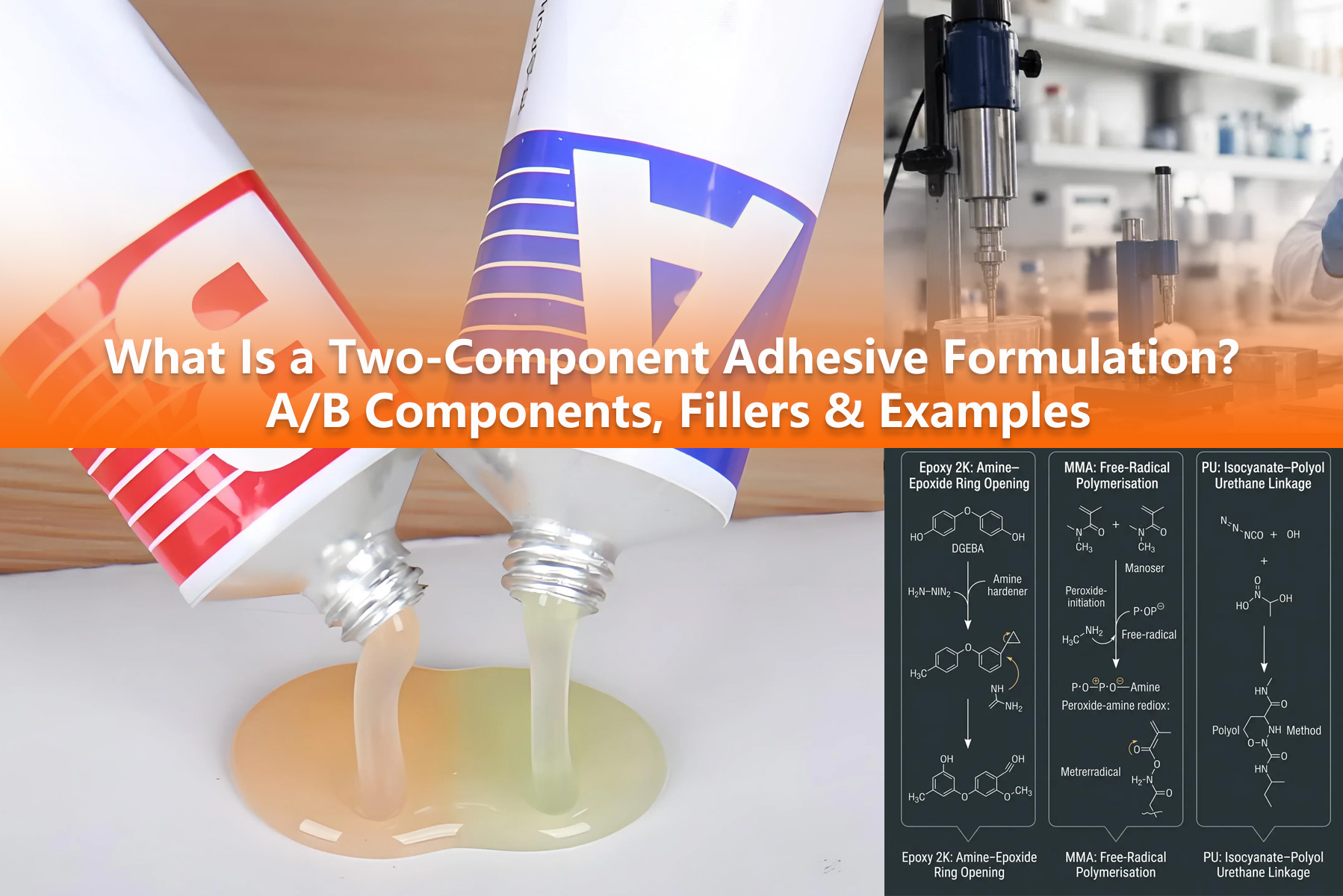
What Is a Two-Component Adhesive Formulation? A/B Components, Fillers & Examples
wo-component adhesives consist of an A component (main resin/monomer) and a B co...
Articel
High-Viscosity Two-Component Adhesive Filling Keeps Going Wrong? One Press-plate Filling Solution for Both 50 ml and 400 ml Cartridges
WEFILL-CAR-AB-F005-400-50 follower-plate filling machine handles high-viscosity ...
Articel
Mastering UV Adhesive Dispensing Machines to Boost Efficiency: Best Practices and the WEFILL-SYR-SF003 Breakthrough
Learn how to operate UV adhesive dispensing machines correctly, improve filling ...