Articel Details
Mastering UV Adhesive Dispensing Machines to Boost Efficiency: Best Practices and the WEFILL-SYR-SF003 Breakthrough
Learn how to operate UV adhesive dispensing machines correctly, improve filling accuracy and efficiency, and discover how the WEFILL-SYR-SF003 single-component dispenser tackles high-viscosity and par
05-11-26
Mastering UV Adhesive Dispensing Machines to Boost Efficiency: Best Practices and the WEFILL-SYR-SF003 Breakthrough
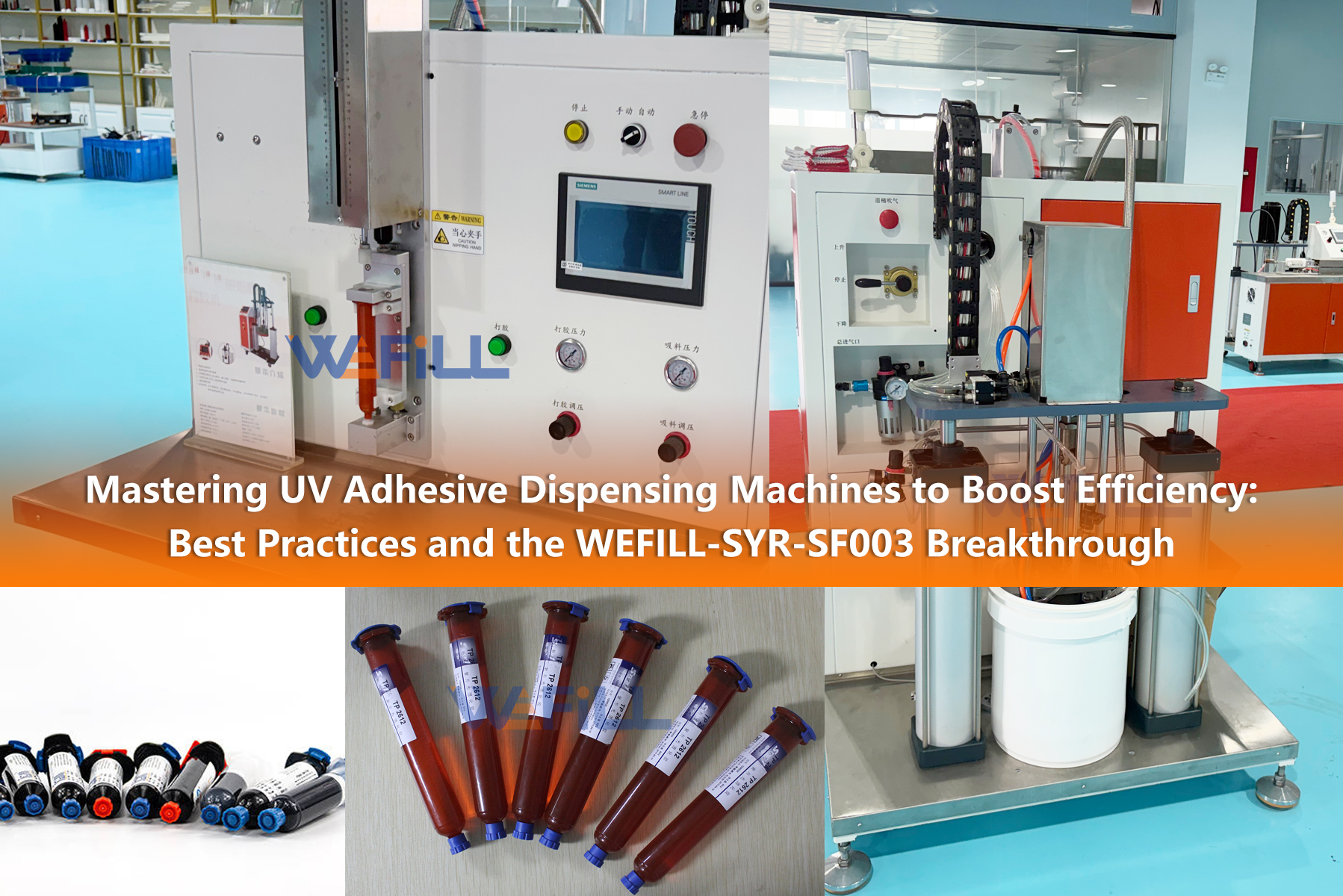
As technology continues to advance, automatic UV adhesive dispensing machines have become essential equipment in industries such as electronics, optoelectronics, medical devices, and communications. These machines enable accurate, fast, and automated UV adhesive filling, greatly improving production efficiency and product quality. This guide provides a detailed overview of how to operate UV adhesive dispensing machines correctly and efficiently, while also introducing how the WEFILL-SYR-SF003 single-component adhesive filling machine delivers a robust breakthrough for demanding syringe-filling applications.
1. Understanding the Equipment and Preparation
Equipment Structure
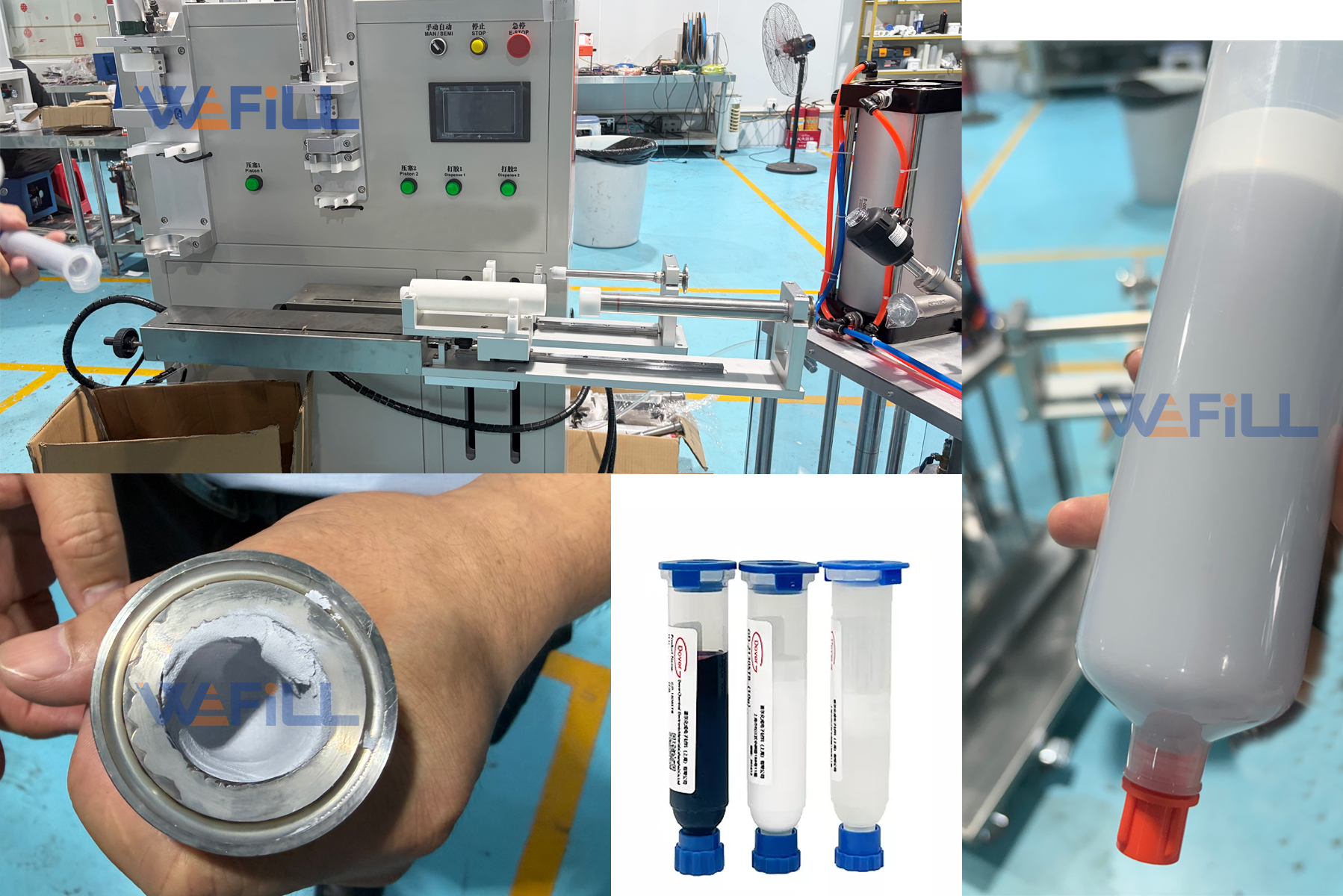
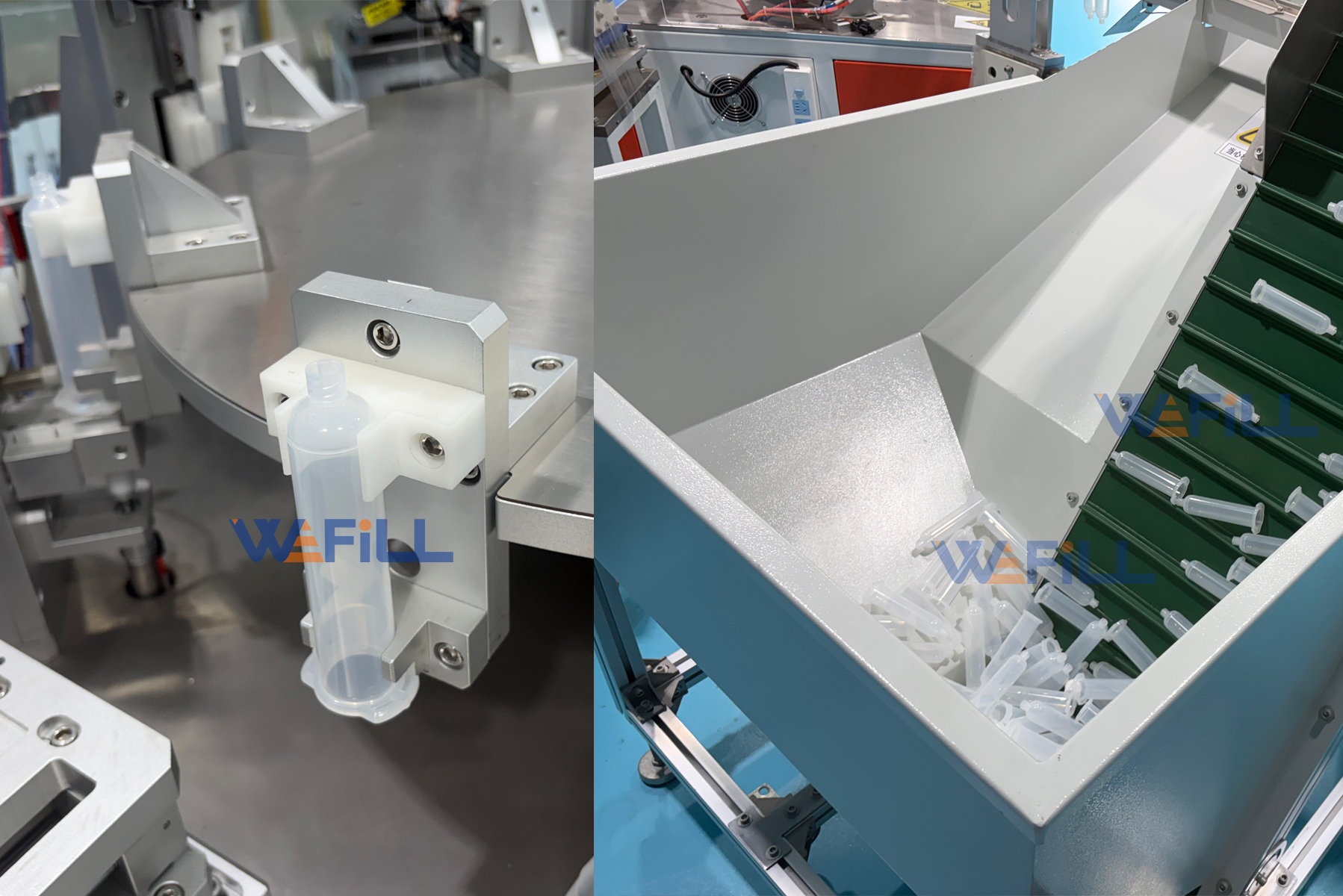
A typical automatic UV adhesive dispensing machine consists of four main systems: the feeding system, metering system, control system, and dispensing/filling execution mechanism. Understanding each part and its function helps operators grasp the working principle and key operating points of the equipment.
● Feeding system: Stores, transports, and supplies UV adhesive stably. Key considerations include light protection, prevention of sedimentation, bubble control, and reliable pipeline sealing.
● Metering system: Determines the accuracy of each filling dose and is central to product consistency.
● Control system: Sets parameters such as dispensing amount, speed, temperature, pressure, and timing, and coordinates the actions of the execution mechanisms.
● Dispensing/filling execution mechanism: Includes needles, valves, and motion platforms, directly affecting filling quality and production efficiency.
Installation and Pre-Start Checks
Make sure the equipment is installed in a stable, well-ventilated, and clean environment. Before startup, carefully check power connections, pneumatic connections, UV adhesive supply, and the condition of all components.
A practical pre-start routine is “Look, Check, and Dry Run”:
● Look: Inspect the machine exterior, tubing, needles, and adhesive container for leakage, cured residue, or foreign matter.
● Check: Confirm power, air supply, grounding, and safety guards are in place. Verify that the UV adhesive is within its shelf life and stored under the required light-protected conditions.
● Dry Run: Run the machine without adhesive or at low pressure to confirm that the motion mechanisms, valves, and control system operate normally.
2. Detailed Operating Procedure
Parameter Setup
Before starting the machine, set key parameters such as filling weight, speed, temperature, and pressure according to the properties of the UV adhesive and the filling requirements. This ensures metering accuracy and filling consistency. For high-viscosity adhesives, adjust feeding pressure and dispensing speed appropriately to avoid bubbles or stringing caused by excessive pressure.
Loading the UV Adhesive
Open the feeding system and load qualified UV adhesive into the reservoir. Ensure the container is properly sealed and there is no leakage. When using bulk containers, confirm that the follower plate or feeding interface matches the container and that all connections are secure to prevent air from entering the system.
Preheating and Debugging
Follow the equipment manual for preheating so that the machine reaches a stable operating temperature. Perform a dry run to verify smooth movement of all actuators and accurate metering. For first-time production or product changeover, run a small trial batch and check single-dose weight with a balance. Observe adhesive shape, bubbles, and stringing before full production.
Production Filling
Once all preparations are confirmed, start the automatic UV adhesive dispensing machine for formal production. Monitor the machine closely and stop immediately if any abnormality occurs. During production, inspect filling weight and appearance at specified intervals and adjust parameters promptly if deviations are found.
3. Maintenance and Care
Daily Cleaning
After each filling task, clean residual adhesive from the inside and outside of the equipment promptly to prevent hardened adhesive from blocking tubes. Periodically perform deep cleaning and calibration of metering components. Use cleaning agents compatible with the adhesive and avoid damaging seals.
Scheduled Maintenance
Carry out routine maintenance according to the manufacturer’s recommended schedule, including replacing worn parts, lubricating moving components, and inspecting electrical elements. This helps ensure long-term stable operation. The metering system should be verified regularly using weight-based calibration to maintain long-term filling accuracy.
Troubleshooting and Repair
If a fault occurs, do not disassemble the machine without authorization. Contact qualified service personnel for diagnosis and repair. Keep fault records and review them to prevent similar issues from recurring.
4. Safety Precautions
Operators must follow safety regulations and wear appropriate personal protective equipment, such as safety glasses and gloves.
Pay attention to electrical safety. Do not modify electrical circuits without authorization, and ensure the equipment is properly grounded to avoid electric shock.
UV adhesives contain photoinitiators. During filling, avoid direct exposure to ultraviolet light, which may cause premature curing and equipment blockage. When UV curing lamps are used, avoid direct exposure of eyes and skin to UV light. Keep the workshop ventilated and dispose of waste adhesive and cleaning fluids according to regulations.
5. WEFILL-SYR-SF003: A Robust Solution for High-Viscosity and Particle-Filled Adhesives
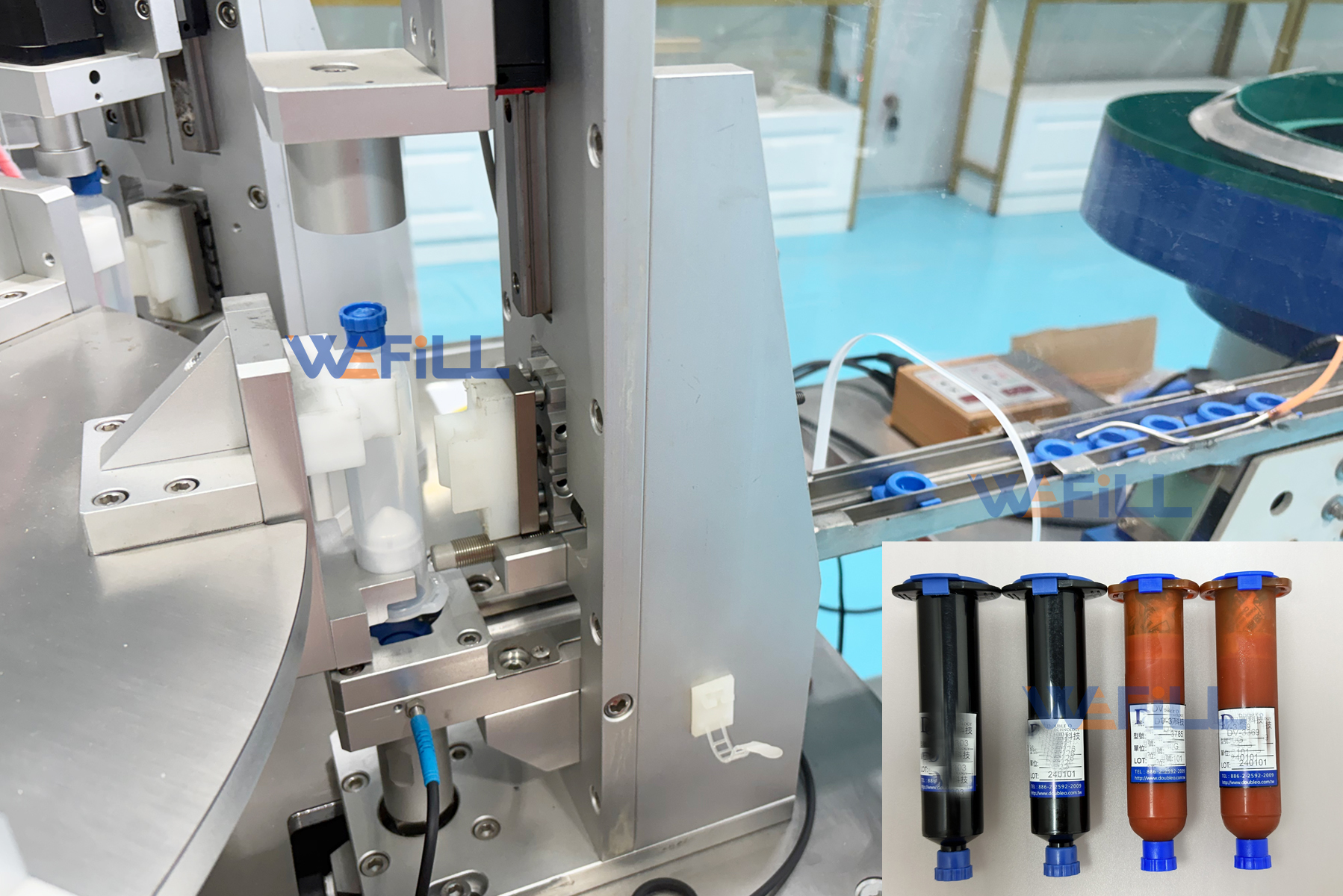
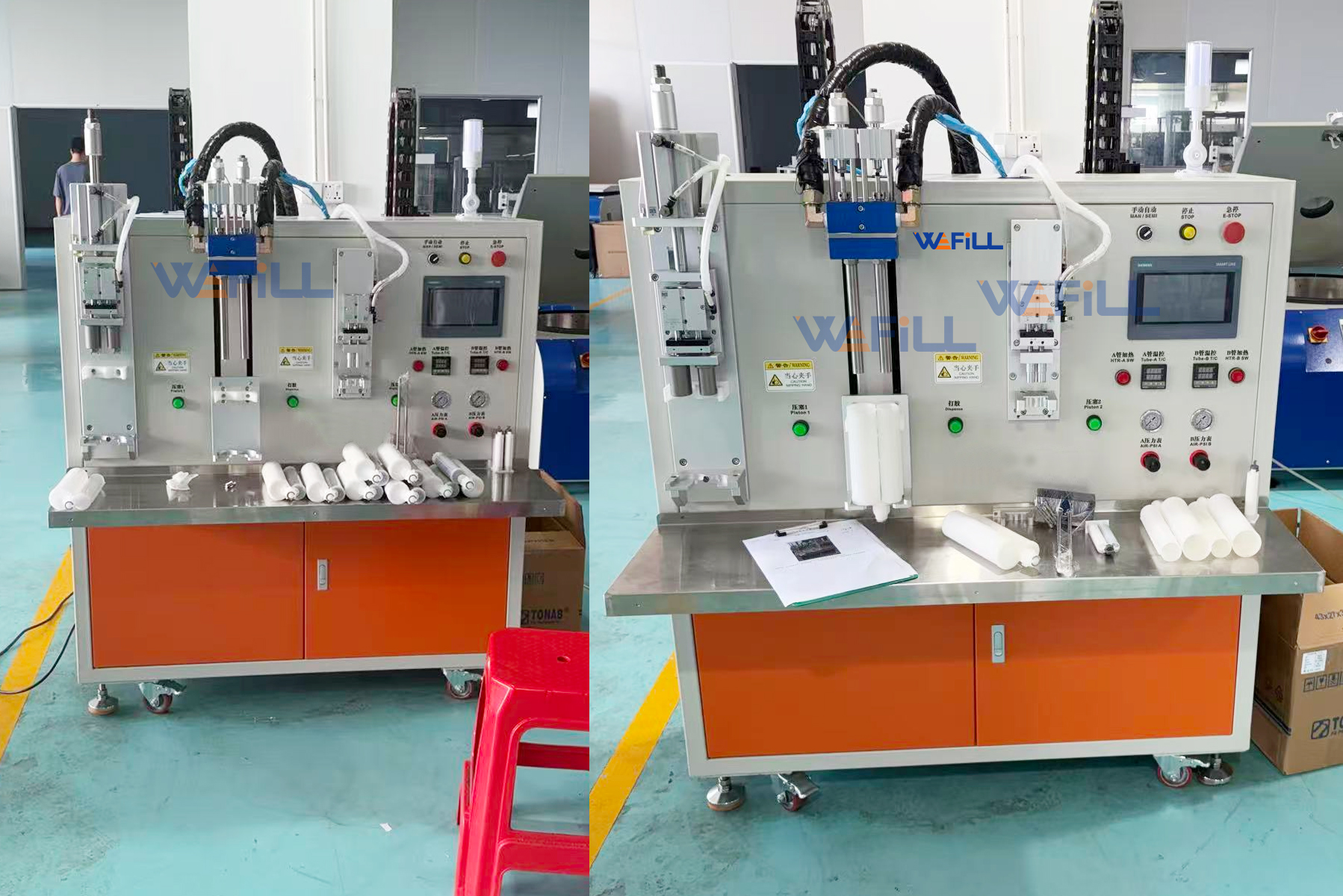
Following proper operating practices helps release the existing performance of a dispensing machine. However, syringe filling of high-viscosity and particle-filled paste adhesives requires more specialized equipment. WEFILL TECH has launched the WEFILL-SYR-SF003 single-component adhesive Filling machine, a professional-grade solution designed to provide a seamless process from 20L bulk containers to precision syringes.
The machine offers wide material compatibility, covering silicone, UV adhesive, grease, PU adhesive, and various other single-component materials. With dimensions of only L1000 × W700 × H1100 mm, it has a small footprint, compact structure, and durable design. Its 0.4–0.7 MPa working air pressure requirement allows flexible deployment and easy movement in various factory environments.
For difficult adhesives, robust equipment is essential. The WEFILL-SYR-SF003 is designed to tackle viscosity limits with a strong follower plate, address particle-related blockage with a custom pump body, and ensure bubble-free, high-precision filling through an innovative process. For users struggling with syringe filling of high-viscosity, particle-filled paste adhesives, this type of professional equipment can help create a more complete closed loop from feeding and metering to filling execution, reducing downtime and waste caused by adhesive blockage, bubbles, and filling-volume fluctuation.
Conclusion
By following the operating guidelines above, users can effectively release equipment performance, improve production efficiency, ensure operational safety, and extend equipment service life. Continuous learning and refinement of operating skills will bring more significant benefits to production activities. At the same time, keeping up with advances in dispensing technology is key to maintaining competitiveness.
WEFILL TECH focuses on the research, development, and manufacturing of fluid control equipment. If you are struggling with syringe filling of high-viscosity or particle-filled paste adhesives, contact WEFILL to discuss a customized fluid control solution for your application.
Blog Tags:UV adhesive dispensing machine, UV glue filling machine, automatic adhesive dispenser, WEFILL-SYR-SF003, single-component adhesive, syringe filling, high-viscosity adhesive, particle-filled adhesive, fluid control equipment, adhesive dispensing guide
Recent Blog Here
Related Articles
Articel
What Does the Pressure Tank Do in an AB Adhesive Dispensing Filling Machine?
Learn how pressure tanks in AB adhesive dispensing machines isolate A/B componen...
Articel
Adhesive Bonding Methods: A Practical Guide to the 10 Dominant Techniques (2026)
Compare 10 adhesive bonding methods—instant, structural, hot melt, pressure-sens...
Articel
What Is a Two-Component Adhesive Formulation? A/B Components, Fillers & Examples
wo-component adhesives consist of an A component (main resin/monomer) and a B co...
Articel
High-Viscosity Two-Component Adhesive Filling Keeps Going Wrong? One Press-plate Filling Solution for Both 50 ml and 400 ml Cartridges
WEFILL-CAR-AB-F005-400-50 follower-plate filling machine handles high-viscosity ...
Articel
Mastering UV Adhesive Dispensing Machines to Boost Efficiency: Best Practices and the WEFILL-SYR-SF003 Breakthrough
Learn how to operate UV adhesive dispensing machines correctly, improve filling ...