تفاصيل المقالة
The Complete Guide to Two-Component Adhesives: From Principles to Dispensing
Discover how two-component adhesives work—epoxy, acrylic, and polyurethane types, mixing ratios, working time, and application tips. Plus, explore WEFILL TECH's filling and dispensing solutions for hi
26-10-26
The Complete Guide to Two-Component Adhesives: From Principles to Dispensing
Two-component adhesives (commonly known as AB glue) are widely used in industrial bonding and everyday repair because of their high strength and reliability. But first-time users often have the same questions: Why must two components be mixed? What happens if the mixing ratio is wrong? How exactly do you calculate working time? And once you've chosen the right adhesive, how do you ensure stable dispensing on the production side? This article walks through the core knowledge of two-component adhesives and introduces WEFILL TECH's solutions for adhesive filling and dispensing—helping you avoid pitfalls from adhesive selection all the way to application.
1. What Is a Two-Component Adhesive?
A two-component adhesive is an adhesive that must be mixed from two separate components (usually called Part A and Part B) before a chemical reaction occurs and curing begins. Before mixing, each component remains stable on its own and can be stored long-term; once mixed, the curing process starts immediately.
This is fundamentally different from one-component adhesives (such as cyanoacrylate instant adhesives or hot-melt adhesives). One-component adhesives cure through moisture in the air, heat, or solvent evaporation, whereas two-component adhesives cure entirely through chemical crosslinking between the two components.
2. Common Types and Chemical Principles
Epoxy
The most common type of two-component adhesive. Part A is typically an epoxy resin, and Part B is a curing agent (such as an amine or anhydride). When mixed, an ring-opening crosslinking reaction occurs, forming a three-dimensional network structure. The cured bond is hard, chemically resistant, and electrically insulating. Epoxy products are widely used in metal bonding, electronic potting, construction anchoring, and structural repair.
Acrylic
Part A and Part B typically contain an accelerator and an initiator (such as a peroxide), respectively. When mixed, they cure rapidly through free-radical polymerization—much faster than epoxy. They offer good adhesion to a wide range of materials including plastics and metals, and are relatively forgiving when it comes to surface preparation.
Polyurethane
One component contains isocyanate, and the other contains a polyol. When mixed, they react to form a flexible, impact-resistant bond suitable for applications that must withstand vibration or thermal expansion and contraction, such as automotive component bonding and composite assembly.
3. Key Points for Using Two-Component Adhesives
Precise ratio is essential. The two components must be mixed in the ratio specified by the product (e.g., 1:1, 2:1, 3:1, or 10:1). Ratio deviations can lead to incomplete curing, reduced strength, or even a complete failure to cure. Use a scale or the metering tools supplied with the product—don't estimate by eye.
Use immediately after mixing. The reaction begins the moment the components are mixed, and the adhesive gradually thickens. You must complete application and bonding within the specified "working time" (also called pot life). Working time is affected by temperature and batch size: the higher the temperature and the larger the batch, the shorter the working time.
Surface preparation affects final strength. Bonding surfaces should be clean, dry, and free of oil and grease. For smooth surfaces such as metal, light abrasion can significantly improve adhesion.
Cure speed is adjustable. Temperature is the main factor affecting cure speed. Raising the temperature generally accelerates curing, and some products support post-curing with heat to enhance final performance. Be careful not to exceed the product's specified maximum temperature.
Observe safety precautions. Some curing agents are irritating. Wear gloves during handling and ensure adequate ventilation. Unmixed components should be stored sealed to avoid moisture absorption or contamination.
4. Typical Application Scenarios
Because of their high strength and reliability, two-component adhesives are mainly used for structural bonding:
● Structural bonding of metal-to-metal and plastic-to-metal
● Automotive component assembly and repair
● Fixation and potting of electronic components
● Structural reinforcement and chemical anchoring in construction
● Composite bonding in aerospace
5. Buying Advice: From Adhesive to Filling—Don't Overlook the Production Side
When selecting an adhesive, focus on several key parameters: working time (determines the application window), cure time (determines fixture occupancy time), bond strength (shear strength and peel strength), temperature resistance range, and compatible materials. Products vary considerably between brands and models, so request the technical data sheet (TDS) from your supplier and run small-sample tests for your specific application.
But if you are an adhesive manufacturer or contract packager, the challenge doesn't end with "which adhesive to choose." High-viscosity two-component adhesives (especially epoxy anchoring adhesives) often present challenges during filling: unstable feed, air entrapment, ratio deviations, and material waste. If filling accuracy falls short, even a superior adhesive may underperform by the time it reaches the end user.
WEFILL TECH is a specialist partner addressing exactly this part of the process. With more than 15 years of experience in fluid control technology, the company focuses on filling and dispensing systems for the adhesive industry, with full capabilities in R&D, precision manufacturing, and system integration. Its product line covers filling machines, automated dispensing systems, cartridges, static mixers, dispensing valves, and pressure tanks, serving industries including electronics, medical, construction, automotive, and industrial assembly.
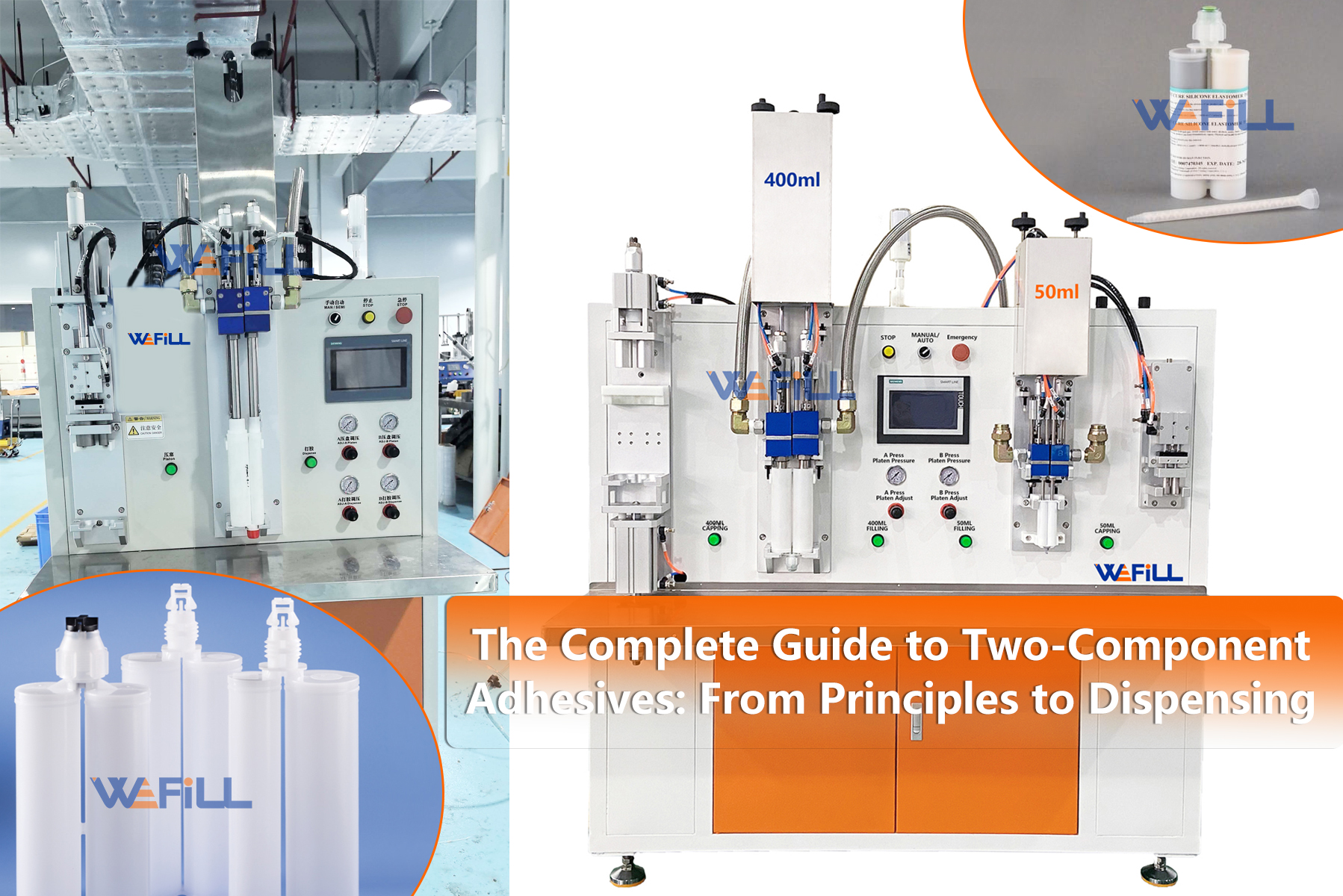
To address the filling challenges of high-viscosity two-component adhesives, WEFILL offers the WEFILL-CAR-AB-F006 pressure-plate reverse-push metering filling machine, specifically designed for 390 ml 3:1 epoxy anchoring adhesive cartridges or 400ml 1:1 50ml 1:1 لزوجة عالية Epoxy Resin adhesive cartridges . The equipment uses a pressure-plate feeding system to push material smoothly into the metering unit, maintaining stable supply even for high-viscosity adhesives. During filling, material is injected from the bottom of the cartridge upward in reverse, using the adhesive's own viscosity to achieve controlled filling—effectively reducing air entrapment, precisely controlling the 3:1 ratio or 1:1 ratio, and minimizing material waste. For demanding applications such as construction chemical anchoring adhesives and structural bonding adhesives, this type of equipment helps manufacturers uphold quality standards at the packaging stage.
If you have specific requirements for adhesive packaging or dispensing, ويبلoffers customized solutions tailored to material characteristics and production line requirements.
خاتمة
The core logic of two-component adhesives is not complicated: the two components remain stable separately, react when mixed, must be combined in the correct ratio, and must be applied within the working time. Master these points, and you can achieve the performance these adhesives are designed to deliver in most structural bonding applications. For manufacturers, choosing the right filling and packaging solution is equally important to turning good adhesive into a good product. From adhesive selection to application, تقنية التعبئة is ready to be your reliable partner in adhesive packaging and dispensing.
الكلمات المفتاحية: two-component adhesive, AB glue, epoxy adhesive, acrylic adhesive, polyurethane adhesive, two-component adhesive mixing ratio, working time, pot life, structural bonding, adhesive filling machine, two-component adhesive filling, epoxy anchoring adhesive filling, 3:1 cartridge filling, pressure-plate filling machine, WEFILL-CAR-AB-F006, adhesive dispensing system, static mixer, dispensing valve, adhesive packaging solution, WEFILL TECH
مدونة حديثة هنا
مقالات ذات صلة
مقال
The Complete Guide to Two-Component Adhesives: From Principles to Dispensing
تميل جميع مولدات نص لوريم إيبسوم على الإنترنت إلى تكرار أجزاء محددة مسبقًا.
مقال
كيف تُحدث الأتمتة غير التقليدية ثورة في تطبيقات المواد اللاصقة؟ — مستقبل الدقة والكفاءة والذكاء من WEFILL
تميل جميع مولدات نص لوريم إيبسوم على الإنترنت إلى تكرار أجزاء محددة مسبقًا.
مقال
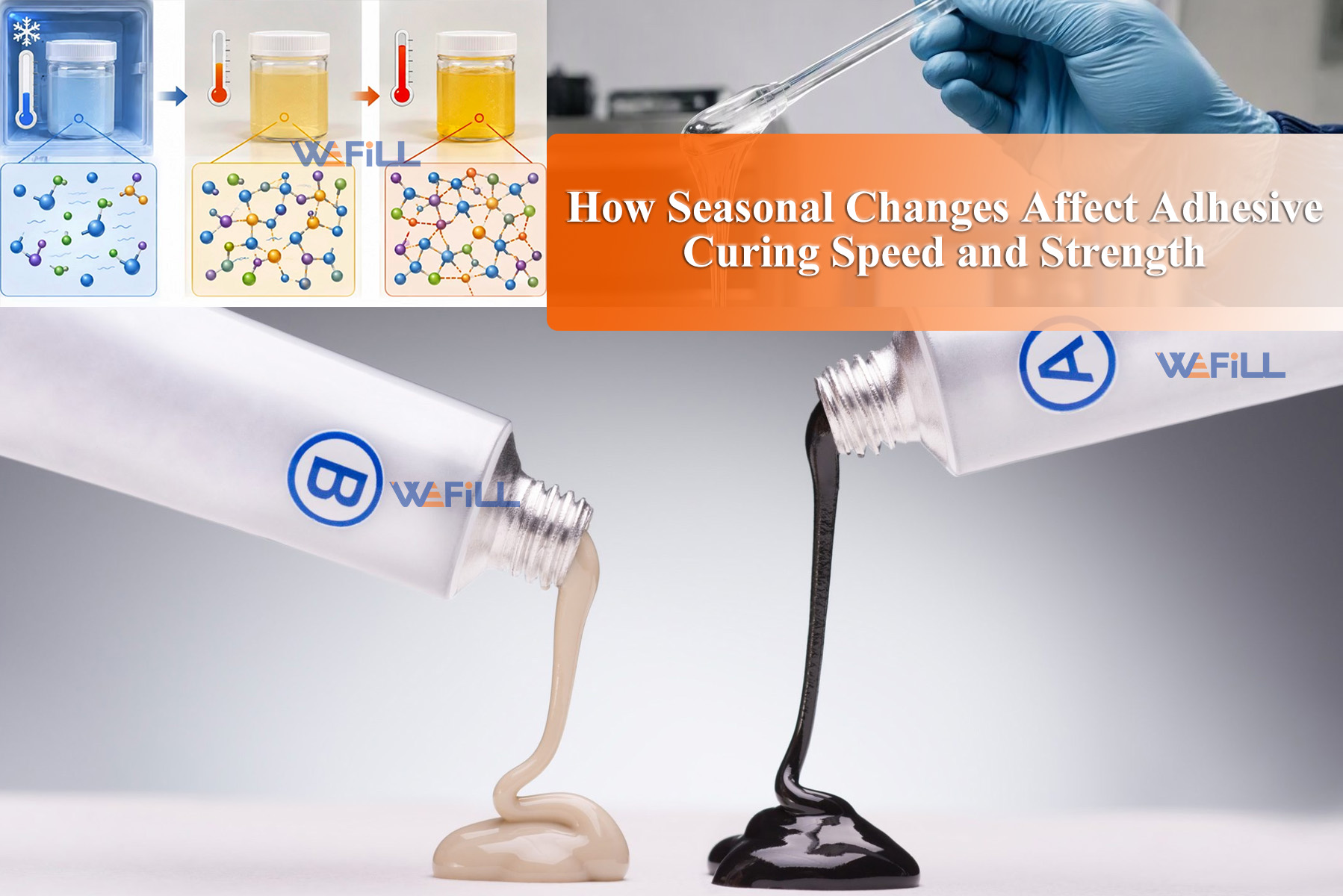
How Seasonal Changes Affect Adhesive Curing Speed and Strength
تميل جميع مولدات نص لوريم إيبسوم على الإنترنت إلى تكرار أجزاء محددة مسبقًا.
مقال
آلة تعبئة وتغطية لاصق ثنائي المكونات ذات لوحة كبيرة AB: ابتكار صناعي فعال ودقيق
تميل جميع مولدات نص لوريم إيبسوم على الإنترنت إلى تكرار أجزاء محددة مسبقًا.

مقال
مواد لاصقة من البولي يوريثان عالية الأداء | قوة ومتانة وحلول ربط مستدامة
تميل جميع مولدات نص لوريم إيبسوم على الإنترنت إلى تكرار أجزاء محددة مسبقًا.