304 Stainless Steel Pressure Tank with Mixer | Customizable Adhesive Dispensing Tank with Safety Valve
Pressure Tank
- Machine Model:WEFILL-PT-M
- Applicable Volume:1L/2L/3L/4L/5L/10L/15L/20L/25L/30L/40L/50L/60L/80L/100L
- Machine Voltage:220V/1Phase/50HZ or Customized Your Country Voltage
- Machine Working Air Pressure:0.4–0.7 MPa
- Pressure Tank Material:stainless steel 304/stainless steel 316/Carbon Steel/Alloy Steel etc.
- Custom-Made Non-Standard:Feed Hopper/Level Float Switch/ Screw-On Sight Glass/Stainless Steel Heating Jacket
- Discharge Options:Top, Side, or Bottom
- Bottom:Rounded Bottom/Flat Bottom/With support legs

Pressure tanks
Product Overview
Pressure tanks are classified by material into carbon steel, stainless steel, and alloy steel. For carbon steel tanks with a powder-coated finish, it is not recommended to pour liquid materials directly into them;instead, you can place the adhesive container inside the tank or use a stainless steel inner tank to store the material For stainless steel tanks liquid materials can be poured directly into the tanks.Working to facilitate control of air pressure and ensure it remains constant), the adhesive is forced out and dispensed to the desired application point.
Product Features
The pressure tank is made of high-quality 304 stainless steel, offering excellent corrosion resistance. The thickened tank wall sand lid ensure safety, allowing for worry free use during operations. Various customizable options are available, such as funnels, liquid level indicators, sight glasses, electric stirrers, pneumatic cylinders and pistons, and heating packs.
Standard Configuration
The standard tank comes with four 2-fen threaded ports on the lid: one safety valve,one pressure regulator, one air release valve, and one dispensing port. The dispensing method should be selected based on the adhesive's viscosity; for highly fluid adhesives, top dispensing is recommended, while for less fluid adhesives, bottom or side dispensing is preferred.
Precautions
When opening the pressure tank, ensure the air supply is disconnected before removing the eye bolt to open the tank lid. (For carbon steel tanks with the dispensing port at the top, it is recommended not to pour the adhesive directly into the pressure tank; instead,use a stainless steel inner tank or place the adhesive container inside the pressure tank.


Parameters

Drawings

Customization

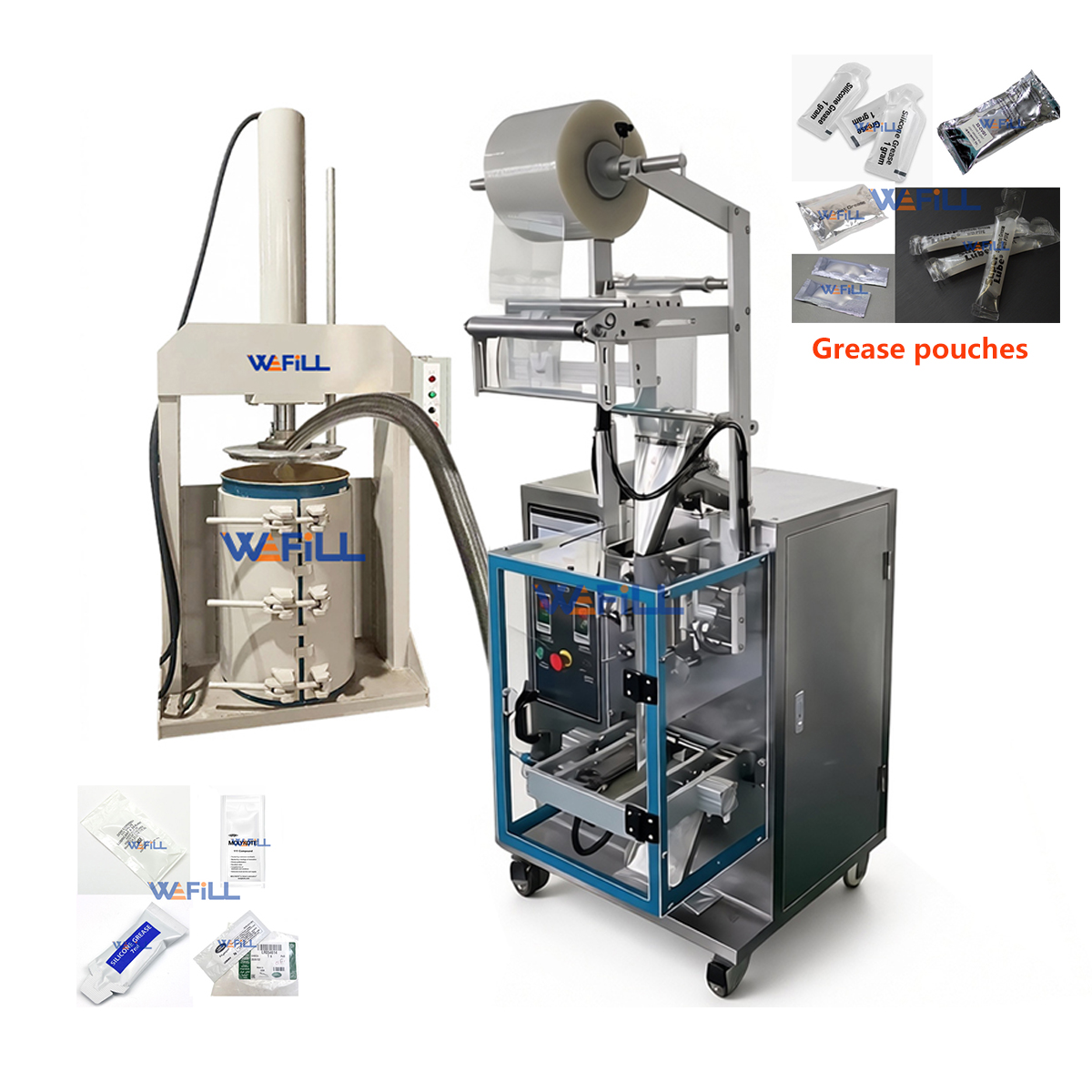
WEFILL Automatic Grease Lubricant 2g 4g 7g Sachets Filling & Sealing Machine with Integrated Feeding Press
Read More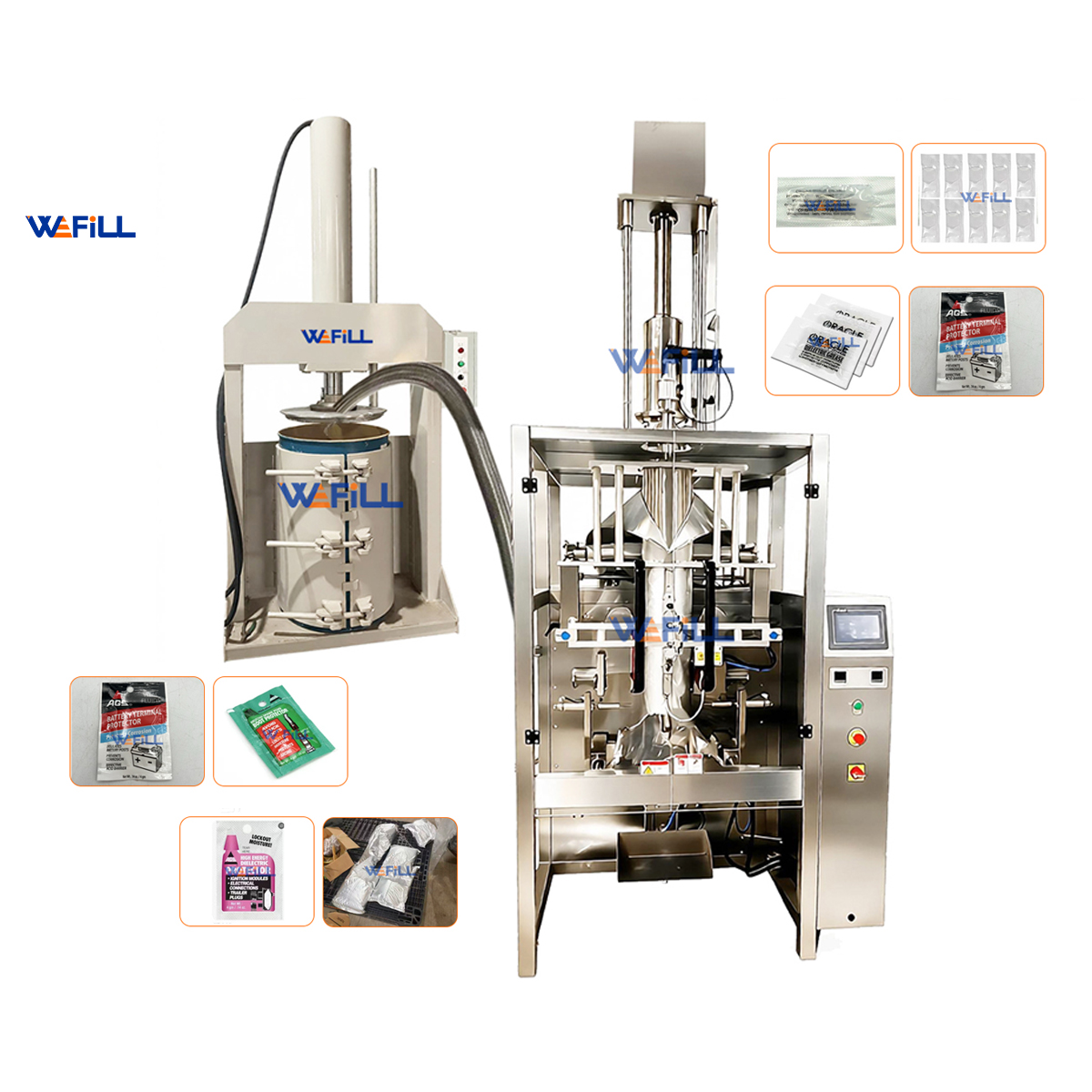
WEFILL Automatic Grease Lubricant Filling & Sealing Machine — for Stand-Up & Spouted Bags, Stick Packs, Pillow Bags, Sachets & Packets (1g–15kg), with Integrated Feeding Press
Read More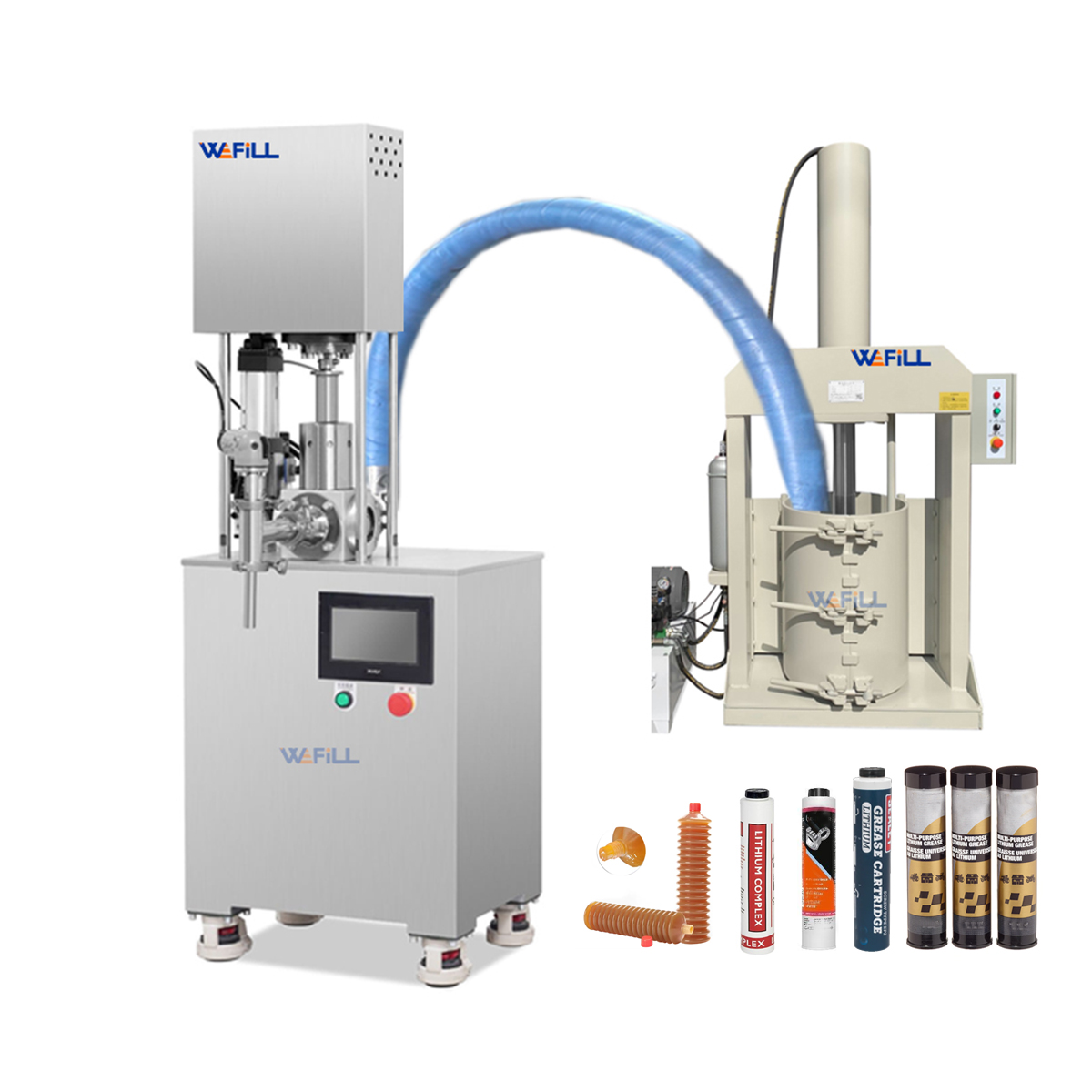
Semi Automatic Spring Tube Cartridge Screw Type Grease Filling Machine | Efficient Lubricant Packaging Equipment
Read More